
Some words are so perfectly constructed for the emotion they describe that you wonder how anyone ever managed without them. Flabbergasted is one of those words — and its flabbergasted etymology is just as surprising and entertaining as the word itself. This complete guide covers everything: what flabbergasted means, where it came from, how its etymology has been debated for centuries, and how to use it correctly in 2026.
Flabbergasted Meaning — The Core Definition
Flabbergasted means utterly astonished, overwhelmed with shock or surprise to the point of being rendered speechless or unable to respond. It describes a state of complete, often sudden, bewilderment — stronger than simply surprised, more total than just shocked. When someone is flabbergasted, they are genuinely at a loss for words or action because what they have just encountered has exceeded every expectation they had.
The key qualities of flabbergasted:
- Complete — not partly surprised but entirely overwhelmed
- Sudden — the shock hits all at once rather than building gradually
- Speechless — flabbergasted often implies an inability to respond immediately
- Genuine — it describes real, unperformed astonishment rather than mild surprise
Flabbergasted Etymology — Where Does the Word Come From?
The flabbergasted etymology is one of the great unsolved mysteries of the English language — and that mystery is itself part of what makes the word fascinating. Despite extensive research by etymologists, the precise origin of flabbergasted remains genuinely uncertain. Here is everything that is known:
First Recorded Use
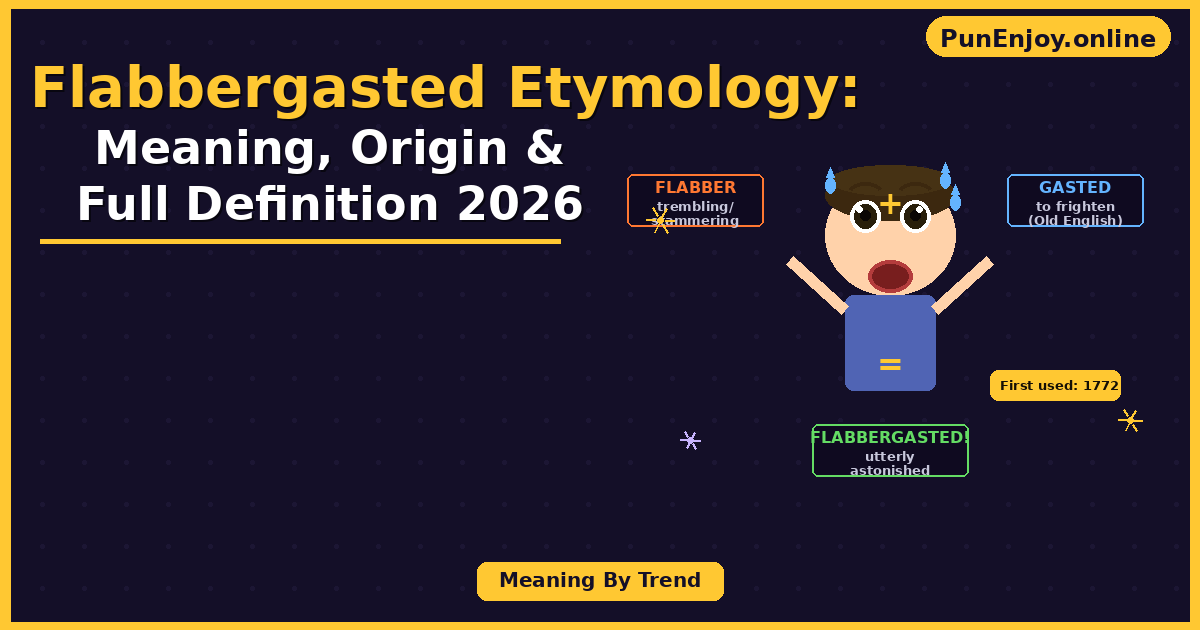
The word flabbergasted first appears in written English in 1772, in a magazine called The Town and Country Magazine, which listed it alongside “bored” as examples of new, fashionable slang terms being used in English society. This makes it a surprisingly old word — over 250 years old — despite feeling thoroughly modern in its expressiveness.
The “Flabber” Component
Most etymologists believe the first part of flabbergasted — “flabber” — is related to the word “flabby” or the dialectal English word “flap”, both of which describe a loose, uncontrolled, trembling quality. The idea is of someone rendered so shocked that they become loose-limbed and trembling — literally flapping with astonishment. Some also connect it to the Scottish and Northern English dialectal word “flabber”, meaning to stutter or speak incoherently.
The “Gasted” Component
The second part — “gasted” — is more clearly traceable. It comes from the Middle English word “gasten” meaning to frighten or terrify, which itself comes from the Old English “gæstan”. This root is also found in the word “aghast” — to be aghast means to be struck with horror or terror, and shares the same gast/ghost root connecting fear with the idea of something supernatural or overwhelming. Shakespeare used “gasted” in King Lear to mean frightened.
The Combined Flabbergasted Etymology
Putting the flabbergasted etymology together: the word appears to combine the idea of being rendered loose and trembling (flabber) with the idea of being struck with terror or overwhelming shock (gasted) — giving us a word that describes the physical and emotional experience of being completely overwhelmed by astonishment simultaneously. The flabbergasted etymology essentially encodes both the physical response (trembling, speechlessness) and the emotional state (complete overwhelm) into a single, brilliantly expressive word.
Flabbergasted Etymology — Alternative Theories
Because the flabbergasted etymology remains officially uncertain, several alternative theories have been proposed over the centuries:
Theory 1 — Dialect Combination
Some etymologists suggest flabbergasted is a combination of two dialectal English words — “flabber” (to stammer or speak incoherently with shock) and “aghast” (overwhelmed with terror) — merged and simplified over time. This theory fits well with the word’s first appearance in a list of fashionable slang, suggesting it emerged from regional dialect into mainstream use in the mid-1700s.
Theory 2 — Expressive Invention
Another school of thought holds that flabbergasted is essentially an expressive invention — a word created specifically to capture a feeling that existing words did not adequately describe. English has a long tradition of creating compound expressive words for emotional states, and flabbergasted fits this pattern perfectly. Under this theory, the flabbergasted etymology is less about traceable roots and more about the creative energy of colloquial English.
Theory 3 — Scottish or Northern English Origin
Some researchers have proposed a Scottish or Northern English dialectal origin for flabbergasted, pointing to the word “flabber” appearing in regional dialect dictionaries as a word for loose, trembling flesh or incoherent speech. This would place the flabbergasted etymology in the regional dialects of Britain before it moved into national usage through London’s fashionable vocabulary in the 1770s.
Flabbergasted in Use — Examples Through History
| Era | Context | Usage |
|---|---|---|
| 1772 | First written record | Listed as fashionable new slang in The Town and Country Magazine |
| 1800s | Victorian literature | Used to describe complete astonishment at social revelations |
| 1900s | Everyday speech | Established as a standard expression of strong surprise |
| 2000s | Modern usage | Widely used in both formal writing and casual conversation |
| 2026 | Current use | Still fully current — one of the most expressive words for total astonishment |
How to Use Flabbergasted Correctly
Flabbergasted is an adjective describing a state of being. It is typically used:
As a Predicate Adjective
- “I was absolutely flabbergasted by the news.”
- “She stood there, completely flabbergasted.”
- “He was flabbergasted — he had no idea what to say.”
- “We were left flabbergasted by the final result.”
With Intensifiers
- “Absolutely flabbergasted” — the most common intensified form
- “Completely flabbergasted” — emphasizing the total nature of the shock
- “Utterly flabbergasted” — formal register intensifier
- “Simply flabbergasted” — used ironically or for understated effect
When to Use Flabbergasted vs. Other Words
- Use flabbergasted when the surprise is complete, sudden, and renders someone speechless
- Use surprised for milder or more general reactions to the unexpected
- Use astonished for strong surprise that does not necessarily imply speechlessness
- Use aghast when the reaction contains horror or strong disapproval alongside shock
- Use dumbfounded when the emphasis is specifically on being rendered unable to speak
Flabbergasted Etymology — Related Words
| Word | Meaning | Connection to Flabbergasted |
|---|---|---|
| Aghast | Struck with horror or terror | Shares the “gast” root meaning frightened |
| Dumbfounded | Rendered speechless by surprise | Similar meaning, different metaphor — “dumb” meaning silent |
| Gobsmacked | Utterly astonished (British slang) | Similar expressiveness, physical metaphor — smacked in the mouth |
| Astounded | Greatly surprised or shocked | Similar meaning, Latinate origin vs Germanic flabbergasted |
| Thunderstruck | Suddenly and severely shocked | Same intensity, different imagery — struck by thunder |
Frequently Asked Questions About Flabbergasted Etymology
What is the etymology of flabbergasted?
The flabbergasted etymology remains officially uncertain, but most etymologists believe it combines “flabber” — related to “flabby” or dialectal words for trembling and incoherent speech — with “gasted,” from Middle English “gasten” meaning to frighten, which also gives us “aghast.” The word first appeared in written English in 1772 in a list of fashionable new slang terms, suggesting it emerged from regional British dialect into mainstream London usage in the mid-18th century.
How old is the word flabbergasted?
Flabbergasted is at least 253 years old — its first recorded written appearance was in 1772 in The Town and Country Magazine. However, since it appeared as an already-established slang term in that first appearance, the actual spoken use likely predates 1772 by some years. The flabbergasted etymology therefore traces back to at least the early-to-mid 18th century in British English.
Is “gasted” related to “ghost”?
Yes — “gasted” and “ghost” share the same Old English root “gæst,” which originally meant spirit, soul, or a terrifying supernatural presence. The connection between ghosts and being frightened is encoded in both words. Shakespeare used “gasted” in King Lear meaning terrified, and “aghast” — to be struck with horror — comes from the same root. The flabbergasted etymology therefore carries a very old connection between fear, spirits, and overwhelming shock.
What is the difference between flabbergasted and gobsmacked?
Both flabbergasted and gobsmacked describe complete astonishment, but they use different physical metaphors. Flabbergasted uses the imagery of trembling and being struck with terror (the flabbergasted etymology). Gobsmacked is British slang using “gob” (mouth) and “smacked” — literally smacked in the mouth with surprise, implying the shock closes your mouth. Both are expressive and informal, but flabbergasted is slightly older and more widely accepted in formal writing.
Why does flabbergasted sound so expressive?
Flabbergasted sounds expressive because its phonetics mirror its meaning. The initial “fl” sound creates a sense of looseness and uncontrolled movement. The “abber” syllables create a stuttering, overwhelmed quality. The hard “g” in “gasted” delivers the shock. The full word takes time to say, which mirrors the experience of being so surprised you cannot immediately respond. This phonetic expressiveness — where the sound of a word reinforces its meaning — is part of why flabbergasted has survived for over 250 years.
Flabbergasted Etymology: The Complete Picture
The flabbergasted etymology tells the story of a word that emerged from the creative, expressive depths of regional British English and became one of the most perfectly suited words in the language for the experience it describes. Whether its “flabber” root means trembling flesh, incoherent speech, or loose-limbed shock — and whether it truly combined with the Old English “gast” root or arrived by a different path — the result is a word that has served English speakers for over 250 years with remarkable precision. To be flabbergasted is to experience something so surprising that language itself briefly fails — which makes it entirely appropriate that the word’s own origin remains a small, delightful mystery.